Last updated: Wednesday 26 August 2026
A temporary timetable is operating on the West of England line – click here for more details. To make it easier for you to complete your journey there are ticket acceptance arrangements in place. Find out more about these arrangements, plus refunds and vouchers here.
What is Soil Moisture Deficit (SMD)?
Parts of our railway are built on embankments containing clay soil, which normally contains a lot of water.
When we experience high temperatures and dry conditions, typically in the summer, water is removed from the clay soil through heat radiation and nearby vegetation. This causes the clay soil to shrink, which disturbs the ground our tracks are built on.
This is known as Soil Moisture Deficit, or SMD, and it can have a big impact on our train service.
How does it affect the railway?
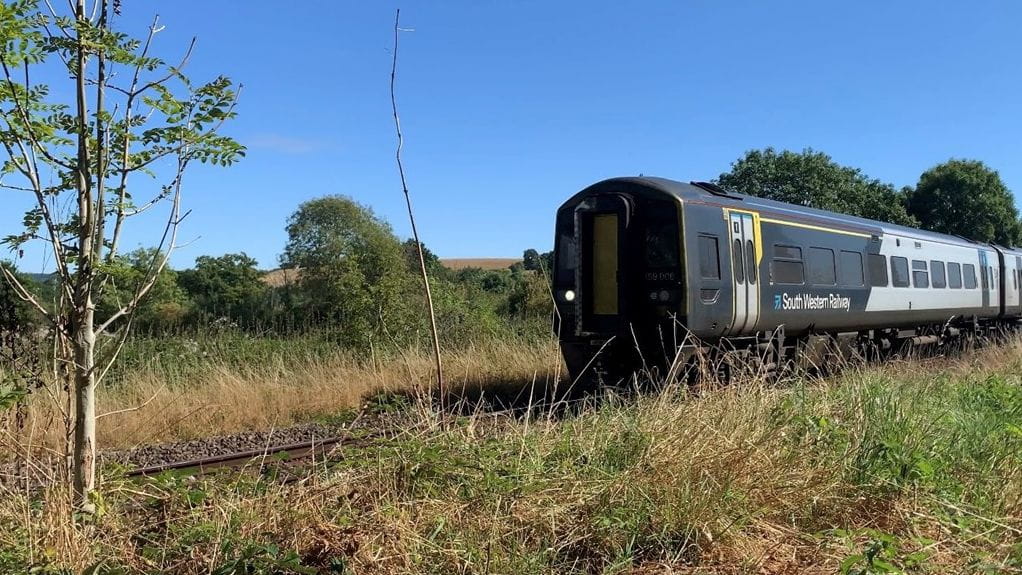 When railway embankments shift it affects track geometry - the precise positioning, alignment and measurements of our tracks. Sleepers can move out of position, shifting sideways or downwards, which affects the rails on top of them.
Tracks need to be level for trains to run at full speeds, and if the levels, or ‘track geometry’, isn’t right, temporary speeds restrictions are put in place to ensure they run safely.
The West of England Line, an important part of our network, is particularly vulnerable to SMD. The route serves a total of 21 stations over 120 miles and connects London with Exeter St Davids in Devon, Salisbury in Wiltshire and Yeovil Junction in Somerset.
The line between Salisbury and Exeter is a predominantly single-track railway. Speed restrictions along long stretches of single-track can cause cumulative delays and disruption along the whole line, which can have a knock-on impact on other services across the network.
In these instances, temporary timetable amendments can offer better reliability for customers on the West of England line.
Unlike buckled rails or issues with signalling equipment, there is no quick fix for track affected by SMD. It can take weeks or even months of rain for moisture levels to return to normal.
How do we prepare for SMD?
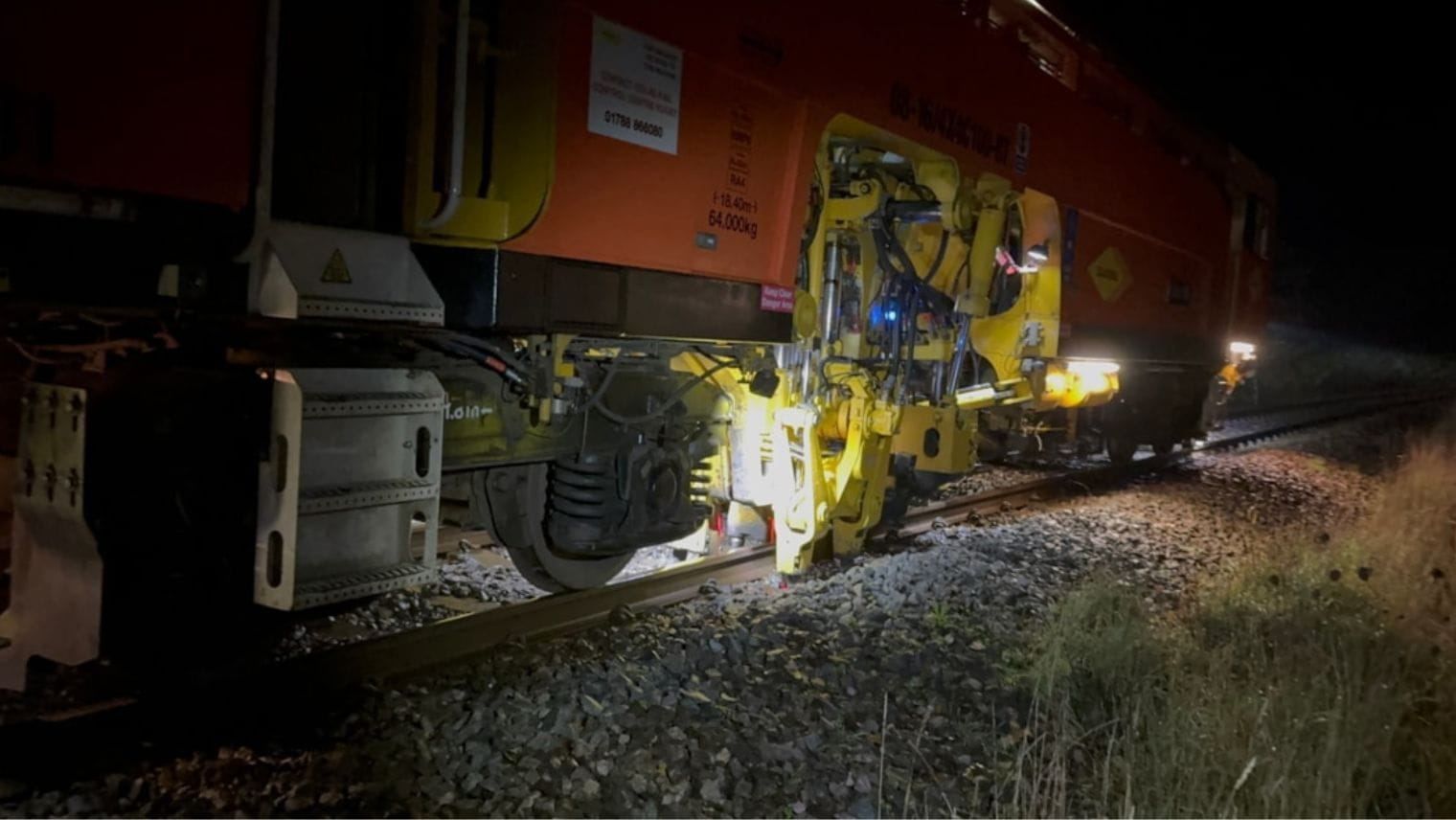 While we cannot prevent SMD, we are better prepared for it, thanks to continuous monitoring of soil moisture levels, enabling earlier identification of risks.
Since we removed the West of England Line’s temporary timetable in November 2025, we’ve worked hard to restore track conditions to a high standard. Over the last year, we have:
We’re closely monitoring soil moisture levels and weather patterns, so that our engineers can understand when track conditions might be affected and react quickly. If we do need to act, this will mean we’ll be able to provide you with more notice about service changes and reduce disruption.
How do we fix the track?
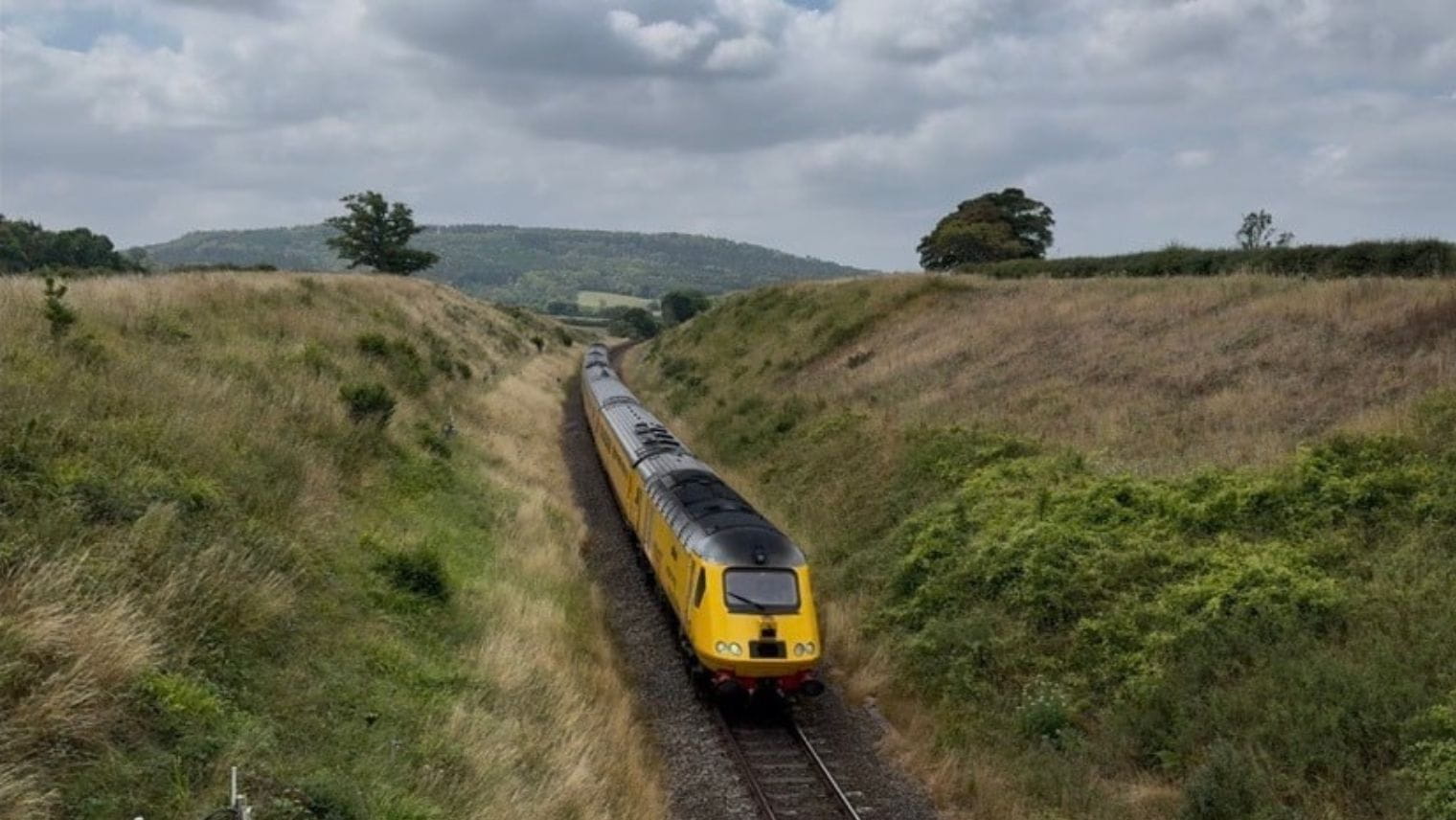
We’re checking track conditions through regular inspections and by using technology such as the New Measurement Train (seen above, passing through Yeovil) which tells us where track geometry needs to be corrected.
To restore track geometry to normal we use tamping machines, which precisely moves ballast back to where it’s needed. However, we can only do that when the clay soil regains moisture, otherwise the tamping will soon be undone by the ground continuing to move.
When the embankments have regained their moisture through rainfall, we’ll tamp the track and remove any speed restrictions. If we experience prolonged spells of dry weather, like we saw in 2022 and 2025, it can take weeks and even months for moisture levels to return to normal.
Longer term improvements
We’re exploring ways to minimise the impact of SMD on both our track and services for customers.
Our engineers have been working with experts at the University of Southampton to understand how better to manage track during SMD conditions, while our train planning teams have looked at a range of options to keep our services as reliable as possible.
Long-term initiatives being explored include:
- Bio-cementation – injecting nutrients into the layer of soil below the track to create a calcium carbon skeleton, which provides more support when the clay soil shrinks
- Injection grouting – injecting expanding polymer foam to fill any voids left by shrinking soil, strengthening the formation of the track
- Self-adjusting sleepers – using sleepers that have a built-in reservoir of chippings, so that when the clay soil below shrinks and leaves voids, the chippings fill the void and prevent the sleepers from moving
- Micro-piling – installing piles in the gap between the rails to provide extra support to the sleepers, which will stiffen the formation of the track and reduce its movement when soil shrinks
Latest information
Since introducing the temporary timetable between Salisbury and Exeter St Davids on Monday 10 August we have seen the driest conditions ever recorded on the Southern Region of Britain’s railway network.
We use a system provided by the UK Meteorological Office to provide a monthly estimate of SMD, which maps Britain into a grid of 40 x 40 km squares and tracks soil moisture levels in each.
Every square in the south of England has recorded record highs for SMD, and while temperatures are cooler and we have seen a small amount of rain, we are still in drought conditions and need a significant amount of rain to restore moisture levels to normal.
Bus services
To help students with their journeys to local schools and colleges we will provide bus services between Axminster, Feniton and Exeter starting on Tuesday 1 September, as follows:
Temporary ticket acceptance is also in place for Exeter College students on Cumberland Way Campus.
Students can use their valid rail tickets at no extra cost on Stagecoach Route 4 bus between St Davids and Honiton Road Park and Ride.
Valid rail tickets will be accepted in the morning (0700 to 1100) and afternoon (1400 to 1800). Please note, tickets are only valid on Stagecoach Route 4, and are not valid on service Stagecoach Route 4A.
Revised train times
To help customers travelling to Exeter we have re-timed the 0640 service from Salisbury to Exeter St Davids to arrive before 0900.
From Tuesday 1 September, this service will depart Salisbury at 0630, calling at Tisbury (0644), Gillingham (0658), Templecombe (0708), Sherborne (0717), Yeovil Junction (0724), Crewkerne (0737), Axminster (0757), Honiton (0812), Feniton (0818), Whimple (0824) Cranbrook (0829), Pinhoe (0833) Exeter Central (0843), and Exeter St Davids (0846).
The 0755 service from Exeter St Davids to London Waterloo will also be re-timed and will depart Exeter St Davids at the earlier time of 0739.
From Tuesday 1 September, this service will depart Exeter St Davids at 0739, calling at Exeter Central at (0743), Pinhoe (0748). Cranbrook (0752), Whimple (0757), Feniton (0802), Honiton (0812), Axminster (0845), Crewkerne (0902), Yeovil Junction (0916), Sherborne (0923), Templecombe (0932), Gillingham (0942), Tisbury (0955), Salisbury (1021), Andover (1038), Basingstoke (1057), Woking (1117), Clapham Junction (1137) and London Waterloo (1149).
What happens next?
We are continuing to monitor soil moisture levels and will provide a further update in due course.
Please check back for updates.