
Best shortest and longest walks

The best walking trails in the South West

In this article, you'll learn the following:
Whether you’re looking for a leisurely stroll or a challenging hike, the South West has an exciting variety of walking trails. Discover some of England’s most stunning scenes, from dazzling cityscapes to gorgeous coastal backdrops. We’ve rounded up our top picks to help you plan your next day out – all of which are easily accessible on our network for convenience.  

1. The South West Coast Path 

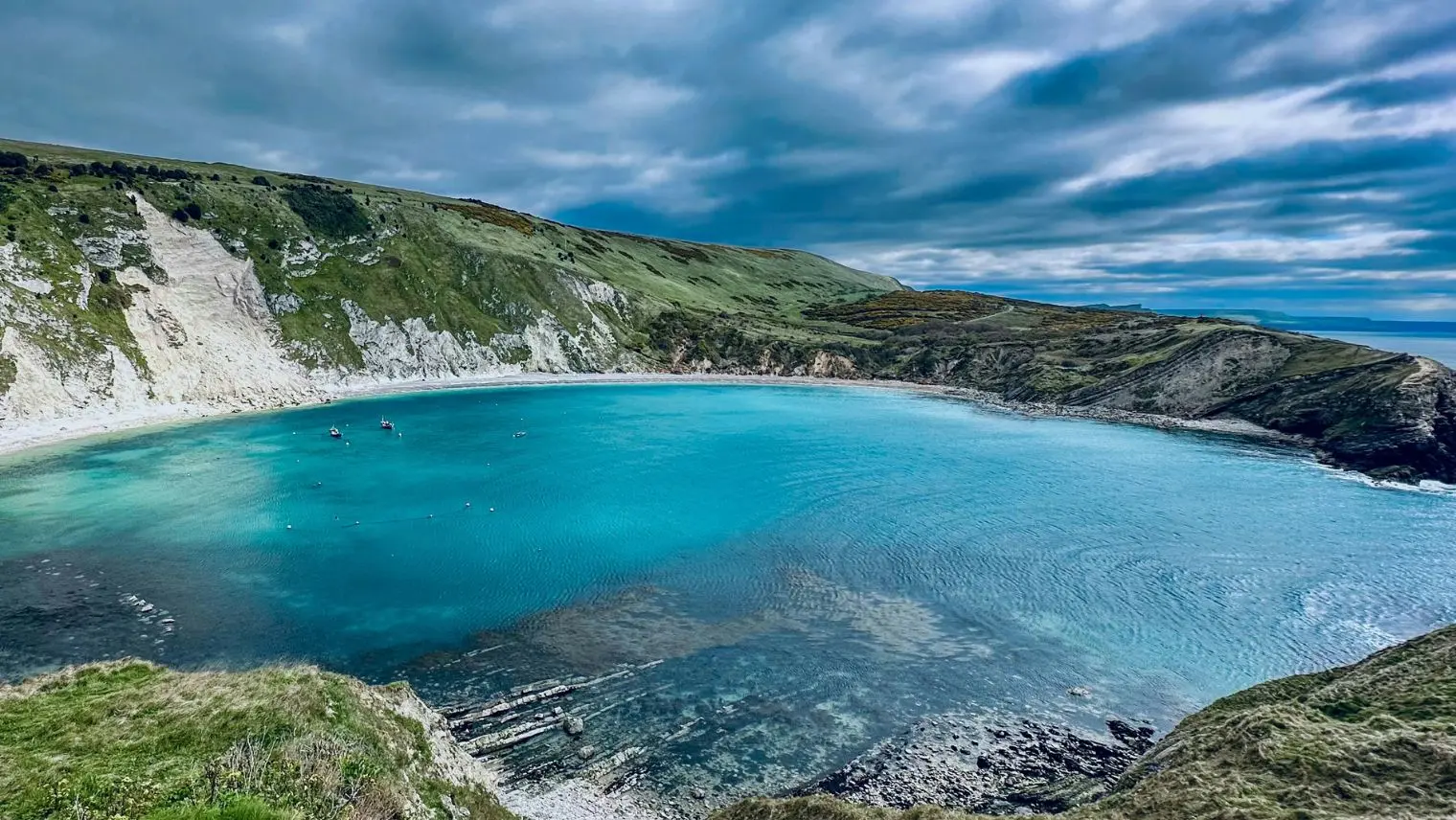
Lulworth Cove

As the UK’s longest National Trail, the South West Coast Path is a must-visit walking spot. Stretching from Minehead in Somerset around the coast of Devon and Cornwall, and finishing at Poole Harbour in Dorset, there’s plenty of beautiful scenery to explore.  

Some of the walks we’d recommend on our network include: 

Weymouth to Lulworth Cove – this popular 10.9-mile route on the Jurassic Coast passes the iconic Durdle Door rock formation and finishes at Lulworth Cove, making it one of the most beautiful trails on the South West Coast Path. 

Sidmouth to Beer – this 8.8-mile trail in Devon offers breathtaking sea views above Weston Beach, Branscombe Beach and Hooken Cliffs. 

Swanage to Studland – the Durlston Country Park loop is just 1.1 miles long, offering a gentle coastal walk with spectacular views. 

Difficulty: Easy to moderate 
Approximate length: The full route takes weeks to complete, but the shorter routes we’ve suggested take between 1.5 and 5.5 hours. 
How to get there: The nearest SWR stations to the South West Coast Path are Axminster, Weymouth, Wool, Wareham and Poole. From there, you can hop on a local bus service or take a taxi to your destination.  

2. Jane Austen Walking Trails 

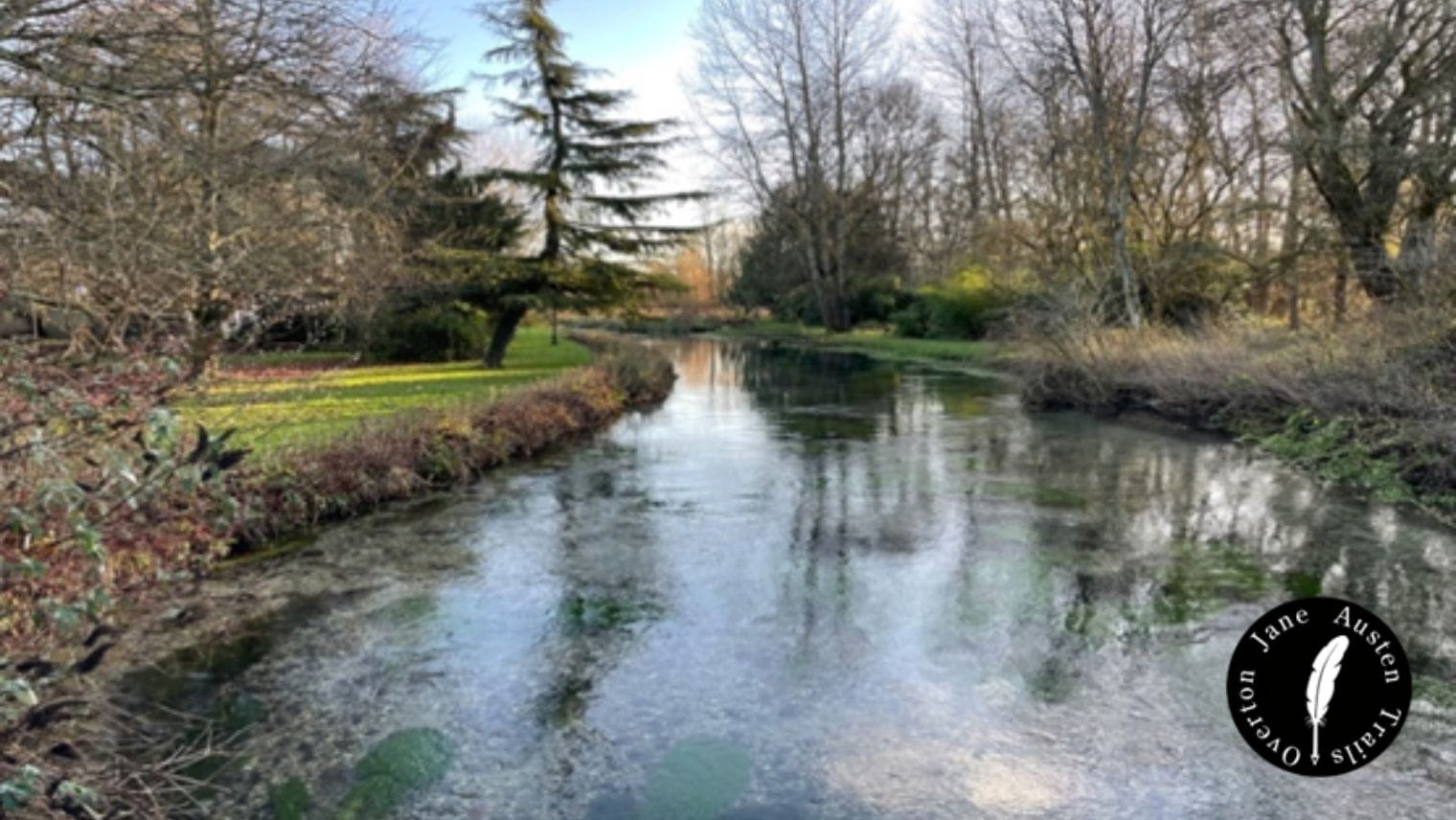
Jane Austen Walking Trail

Overton is the birthplace of the author Jane Austen, making it a must-visit location for literature lovers. And what better way to commemorate Austen’s life and work than a picturesque walking trail through the Hampshire countryside? There are several trails featuring scenic footpaths, bridleways, and lanes, including: 

Overton Village
– this 2.5-mile circular walk lets you explore Overton as it would have been in Jane Austen’s time. 

Overton to Steventon – a 9-mile circular walk from Overton to Steventon, passing through beautiful countryside. 

Overton to Deane – this 6.5-mile walk passes through fields, country lanes and the grounds of Ashe Park. 

Learn more about Jane Austen Walking Trails to plan your ideal route.  

Difficulty: Easy to moderate 
Approximate length: 1 to 4.5 hours 
How to get there: Catch the train to Overton from London Waterloo, Salisbury, Exeter St Davids or Yeovil Junction.  

3. Avon Valley Path 

The Avon Valley Path begins in one of the UK’s most beautiful cathedral cities, Salisbury. On this 34-mile walk, you’ll follow the River Avon through vibrant meadows buzzing with wildlife, ending up in the seaside town of Christchurch. You might even spot some grazing New Forest ponies along the way! 

The route is well signposted, and there are plenty of quaint pubs to stop and recharge. It’s split into five sections, and it’s best to complete it over several days or even a week so you can enjoy this walk and all its beautiful scenery. 

Difficulty: Moderate 
Approximate length: The full 34-mile route takes several days to complete, but each of the five sections takes between 2 and 4.5 hours if you’d prefer a shorter walk. 
How to get there: SWR has stations at either end of the route in Salisbury and Christchurch

4. Solent Way 

The Solent Way is one of the most picturesque walks in Hampshire. At 60 miles, this long-distance walk is perfect for those looking to combine exercise with scenic views and local attractions. Along the trail, you’ll enjoy shingle beaches, deserted coastal marshes, promenades and two ferry trips. You’ll also pass some of the best waterside pubs in the South West. 

Since the Solent Way is quite long, we’d recommend the Lymington to Keyhaven loop for a shorter, 5.5-mile walk. This route offers spectacular views across the Solent and plenty of birdwatching opportunities at the salt marshes. 

Difficulty: Easy to moderate 
Approximate length: The full route takes several days to complete, but the Lymington to Keyhaven loop takes around 1.5 to 2 hours. 
How to get there: Catch the train to Lymington Pier.  

5. East Devon Way 

East devon walking trail

This 40-mile footpath runs from Exmouth in East Devon to Lyme Regis in Dorset, linking with the South West Coast Path at both ends. If you want to explore this area’s landscape beyond the Jurassic Coast, the East Devon Way is the ideal walking trail.  

The route takes you further inland, through the East Devon National Landscape – one of the top AONBs in the South West. You’ll pass by several rivers, valleys, woodland and heathland, with plenty of wildlife-spotting opportunities along the way.  

If the full trail is too long, choose one of the shorter, circular routes, including: 

Woodbury Common Circular – this 4.5-mile route starts at Woodbury Castle, following tracks and footpaths towards the village. You’ll also enjoy views of the River Exe Estuary. 
Trinity Hill Circular – starting from Trinity Hill Nature Reserve, this 4.5-mile walk passes the disused Cannington Viaduct. 
Musbury Castle Circular – ideal for history lovers, this 4.4-mile walk includes the Iron Age hill fort of Musbury Castle, with breathtaking views from the top.  

Difficulty: Easy to moderate 
Approximate length: The East Devon Way takes several days to complete, while the circular routes take less than 3 hours.  
How to get there: There are several SWR stations close to the East Devon Way, including Cranbrook, Honiton and Axminster. From there, you can hop on a local bus to your destination or take a taxi. 

6. The Waterloo Walk

Follow a leisurely walking route from London Waterloo station to Apsley House on Hyde Park Corner to encounter many attractions, monuments and pubs associated with the famous battle, its British commander and the Napoleonic Wars.

Stop 1: London Waterloo station

Battle of Waterloo memorial

A memorial bronze replica of the campaign medal given to every soldier who fought in the Battle of Waterloo is located on the mezzanine level, above the concourse.

On Waterloo Road outside the station, you will also find The Duke of Wellington pub decorated with paintings of the man himself, as well as Bar Elba, a rooftop cocktail bar named after the island where Napoleon was first exiled. 


Stop 2: Waterloo Bridge

Waterloo Bridge

The first Waterloo Bridge was opened on the second anniversary of the battle, 18 June 1817. It has been depicted by artists including John Constable and Claude Monet. Due to its position on a bend in the River Thames, the bridge provides a unique view of both Westminster to the west and the City of London to the east. 

On the north end of Waterloo Bridge is Somerset House, the south wing of which was once a Royal Navy headquarters and home to the Navy Board, where midshipmen would take exams for promotion to lieutenant. Visitors to Somerset House can climb the grand Nelson Staircase to reach the former Navy Board Rooms.

Next door to Somerset House is King's College London, one of the world’s leading universities, established with the sponsorship of The Duke of Wellington while he was Prime Minister in 1829.  

Across the street on the Strand is The Wellington, a historic pub with over 150 years of history, serving traditional food and drinks. 

Stop 3: Trafalgar Square

National Gallery

One of the world’s most iconic squares commemorates the most famous naval battle in history, when Vice-Admiral Lord Nelson was killed defeating the French and Spanish fleets. At its centre stands Nelson’s Column, surrounded by fountains and statues. 

The National Gallery and National Portrait Gallery contain many depictions of The Duke of Wellington and the Napoleonic Wars. The recent film The Duke, starring Jim Broadbent and Helen Mirren, tells the story of the theft of Francisco de Goya’s portrait of The Duke of Wellington from the National Gallery in 1961. 

Just off Trafalgar Sqaure at the top of Whitehall is the Horse & Guardsman pub. When you enter, you will be greeted by Elizabeth Thompson’s Scotland Forever! painting of the charge of the Royal Scots Greys at the Battle of Waterloo. The pub displays lots of memorabilia and artwork relating to military history. 

Stop 4: St James’s

Duke of York Column

Through Admiralty Arch and onto The Mall, you will find wide steps leading up to the Duke of York Column and Waterloo Place to your right. Prince Frederick, Duke of York was Commander-in-Chief of the British Army during the Napoleonic Wars. He is remembered in the children's nursery rhyme The Grand Old Duke of York.

Behind the column on Waterloo Place and Pall Mall stands the Athenaeum Club, one of St James’s many private members’ clubs. The Duke of Wellington was one of the club’s most distinguished members. On Waterloo Place outside the club are The Duke of Wellington’s mounting blocks, a pair of raised kerb stones to help the ageing Duke mount and dismount his horse. 

On the south side of St James’s Park is Wellington Barracks, home to Foot Guards regiments. The Guards Museum is housed within the barracks. On the west side towards Whitehall is Horse Guards, where The Duke was based during his own time as Commander-in-Chief. The parade ground is used for Trooping the Colour every year and the main building hosts the Household Cavalry Museum. 


Stop 5: Wellington Arch

Down The Mall, past Buckingham Palace and at the end of Constitution Hill is Wellington Arch. Designed both to commemorate victory against Napoleon and provide a suitably grand approach from Hyde Park to the recently completed Buckingham Palace, it was initially topped by a colossal, 8.5 metre high equestrian statue of The Duke of Wellington, forged from French cannon captured at the Battle of Waterloo. 

The statue of The Duke was considered disproportionately large and an eyesore. While he intervened to keep it in place while he was still alive, it was later removed. A smaller statue of The Duke stands nearby. Anyone wishing to see the original statue can take an SWR service to Aldershot, home of the British Army, where it is situated on Round Hill. 

Wellington Arch is now topped by the largest bronze sculpture in Europe, depicting the Angel of Peace. Visitors can survey the surrounding Royal Parks and watch the Changing of the Guard from its balconies. Inside the arch is a gallery space with regular exhibitions. 


Stop 6: Apsley House

Apsley House

The final stop is Apsley House, the London townhouse of The Duke of Wellington. While it is managed by English Heritage and is open to the public, it remains the home of the current, ninth Duke. As it was once the first in a line of houses on the north side of Piccadilly, it is known as Number One, London.

The house displays the Wellington Collection, a large assortment of paintings, art and other treasures associated with the first Duke. This includes The Duke’s uniforms, a large Portuguese silver centrepiece, Napoleon's sword and death mask, and a titanic statue of Napoleon as Mars the Peacemaker originally from the Louvre. 

Bonus stops

St Paul's Cathedral

If you fancy a drink after your walk, check out The Grenadier pub nearby. The Grenadier Guards regiment acquired its famous bearskin headdress when it defeated the Grenadiers of the French Imperial Guard at the Battle of Waterloo. 

If you have more time before you catch your train, consider a visit to Saint Paul’s Cathedral, where The Duke of Wellington and Lord Nelson are both buried in the crypt.

Difficulty: Easy
How to get there: Head to London Waterloo to start your walking adventure. 

More walking trails to explore in the South West 

Discover more of the best walking trails in the South West, from vibrant seaside towns to London’s Royal Parks. 

Bournemouth to Hengistbury Head  

Bournemouth walking trail

Combining stunning coastal views with gorgeous greenery, you don’t want to miss the Bournemouth to Hengistbury Head trail, via Boscombe. This route is ideal for all skill levels, so the whole family can get involved. A highlight of this walk is the views of The Needles and Hengistbury Head from the South West Coast Path. 

Begin your journey in the beautiful coastal town of Bournemouth before heading east towards Boscombe Pier. From there, continue until you reach Hengistbury Head. 

Difficulty: Easy 
Approximate length: 4 hours 
How to get there: The nearest train station to this trail is Bournemouth. From there, it’s an 18-minute walk or a short bus journey to the top of Bath Hill, where the trail begins. 
 

Tamsin Trail, Richmond Park 

Richmond Park


The Tamsin Trail is a popular walking route in Richmond Park. It circles the park’s perimeter, offering the best deer-spotting opportunities. A slight detour takes you to King Henry’s Mound in Pembroke Lodge Gardens, where you’ll get one of the best panoramic views of London. On clear days, you’ll see the Thames Valley to the west and St Paul’s Cathedral to the east. 

If you don’t fancy the full 7.3 miles, join the path from any of the park’s gates. There are plenty of cafés along the route where you can refuel. 

Difficulty: Easy to moderate 
Approximate length: 2.5 to 3 hours 
How to get there: Richmond Gate is a 19-minute walk from Richmond.  

Plan your walking adventure with SWR 

Travelling by train is one of the easiest ways to reach these walking trails in the South West, since many of the routes are located near our stations. Find the best ticket types for your journey, including Advance, and Sunday Out tickets.  

If you’re travelling as a group, our GroupSave tickets are the ideal choice, saving you money. Check your eligibility for any Railcards and discounts for further savings.  

Don’t forget to visit SWR Rewards for exclusive offers on hotels, restaurants, attractions and more.  

While you’re here, sign up for our newsletter to get the latest competitions, offers, and travel inspiration sent straight to your inbox. 

 
Loading...