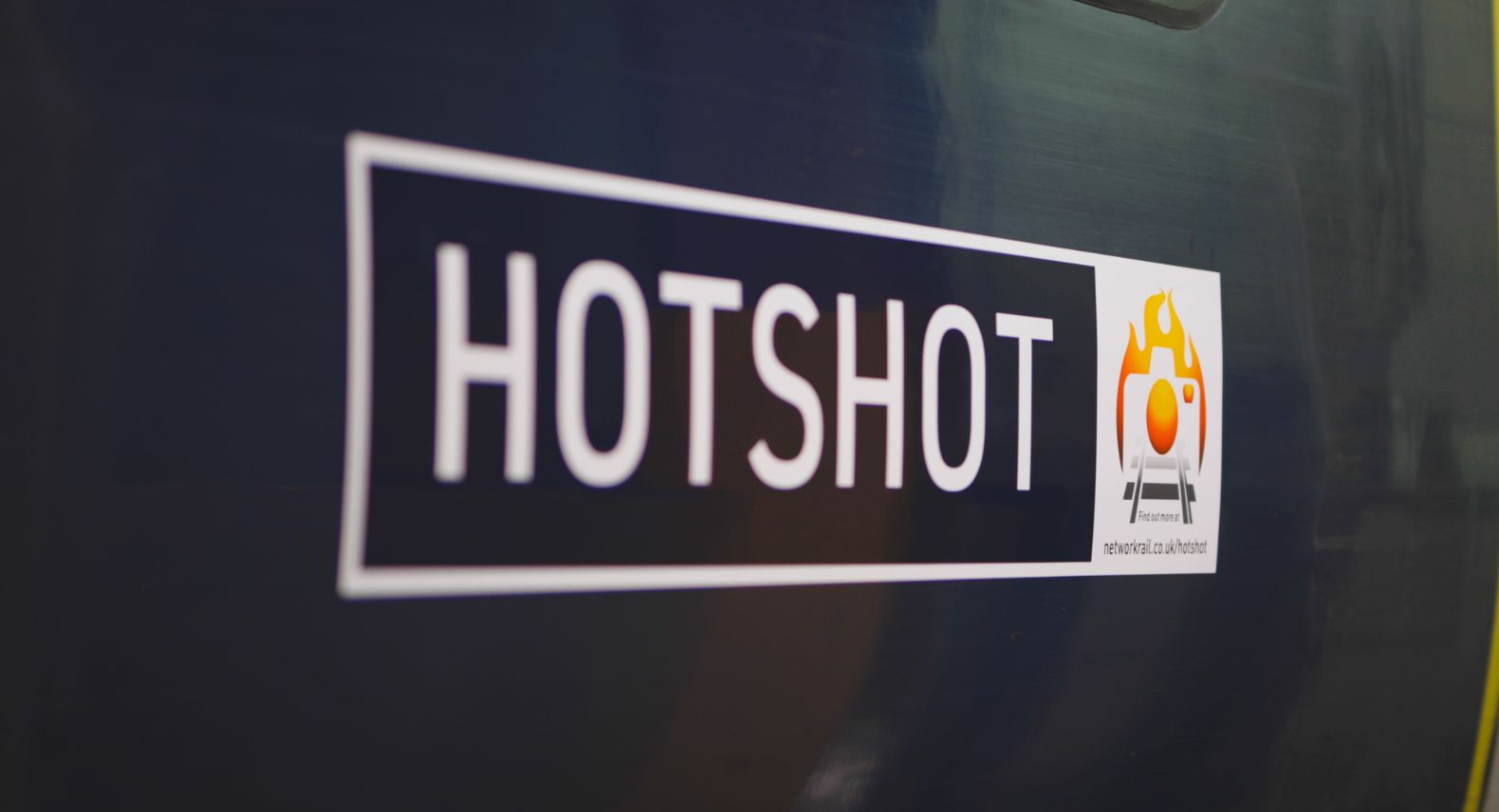
- South Western Railway and Network Rail collaboration sees innovative year-long trial of thermal imaging cameras to help prevent delays
- Two cameras have been fitted to a South Western Railway train, now named ‘Hotshot’, to monitor tracks in London, Surrey, Hampshire, Berkshire and Dorset
- Faults that the Hotshot train will help detect can otherwise typically cause around 200 minutes of delays
- The project has been designed, managed and funded by Angel Trains
SOUTH Western Railway (SWR) and Network Rail are trialling innovative thermal imaging to help prevent delays to train journeys.
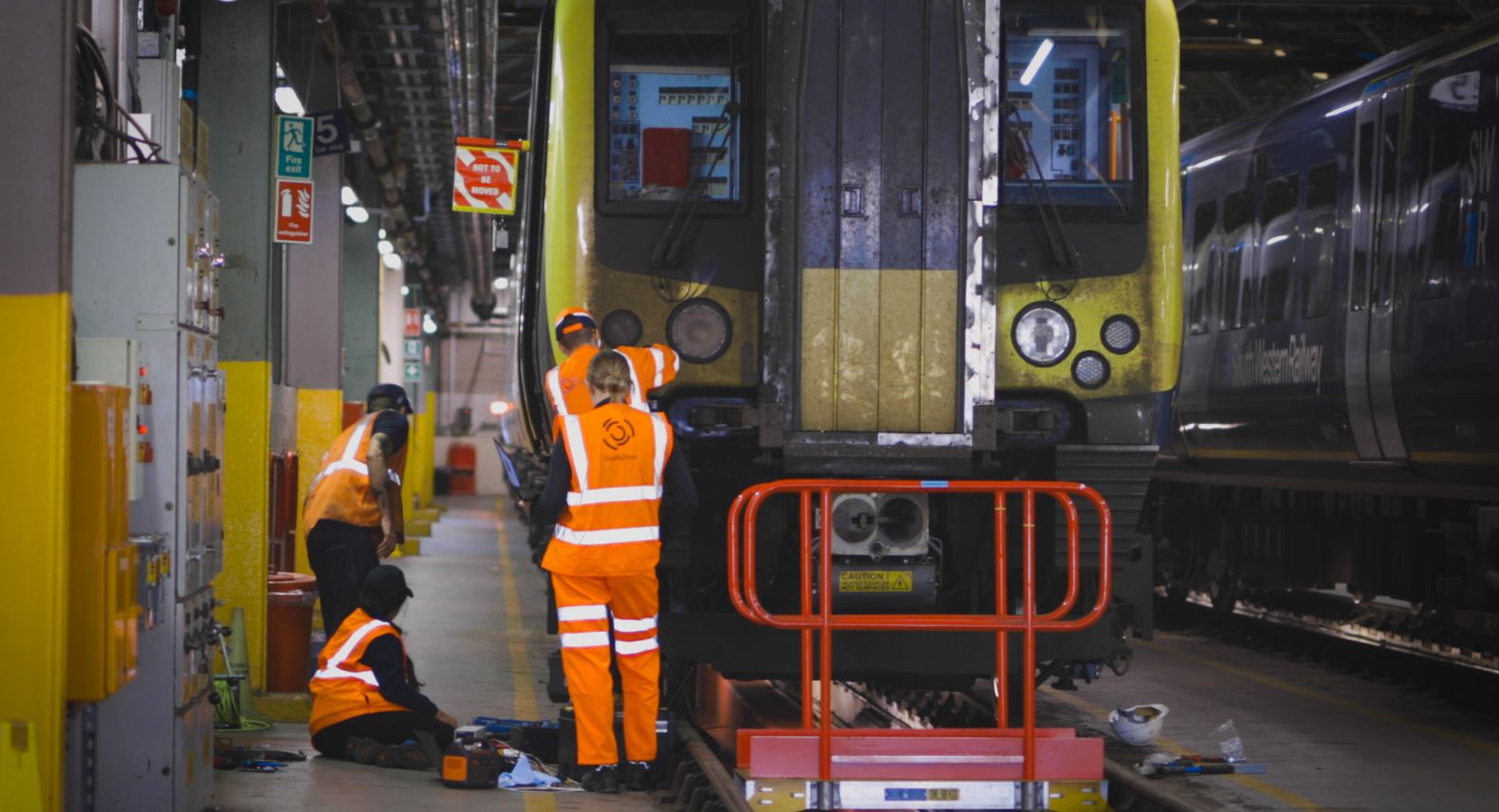
Customers travelling on the SWR network may spot ‘Hotshot’ – a newly named Class 450 train fitted with cameras to monitor track conditions, allowing engineers to tackle infrastructure problems before they cause disruption.
Two cameras have been fitted to the train: a thermal imaging camera at the front to monitor the tracks for electrical issues; and a camera underneath to monitor the shoe gear and the third rail, that provide power for the train.
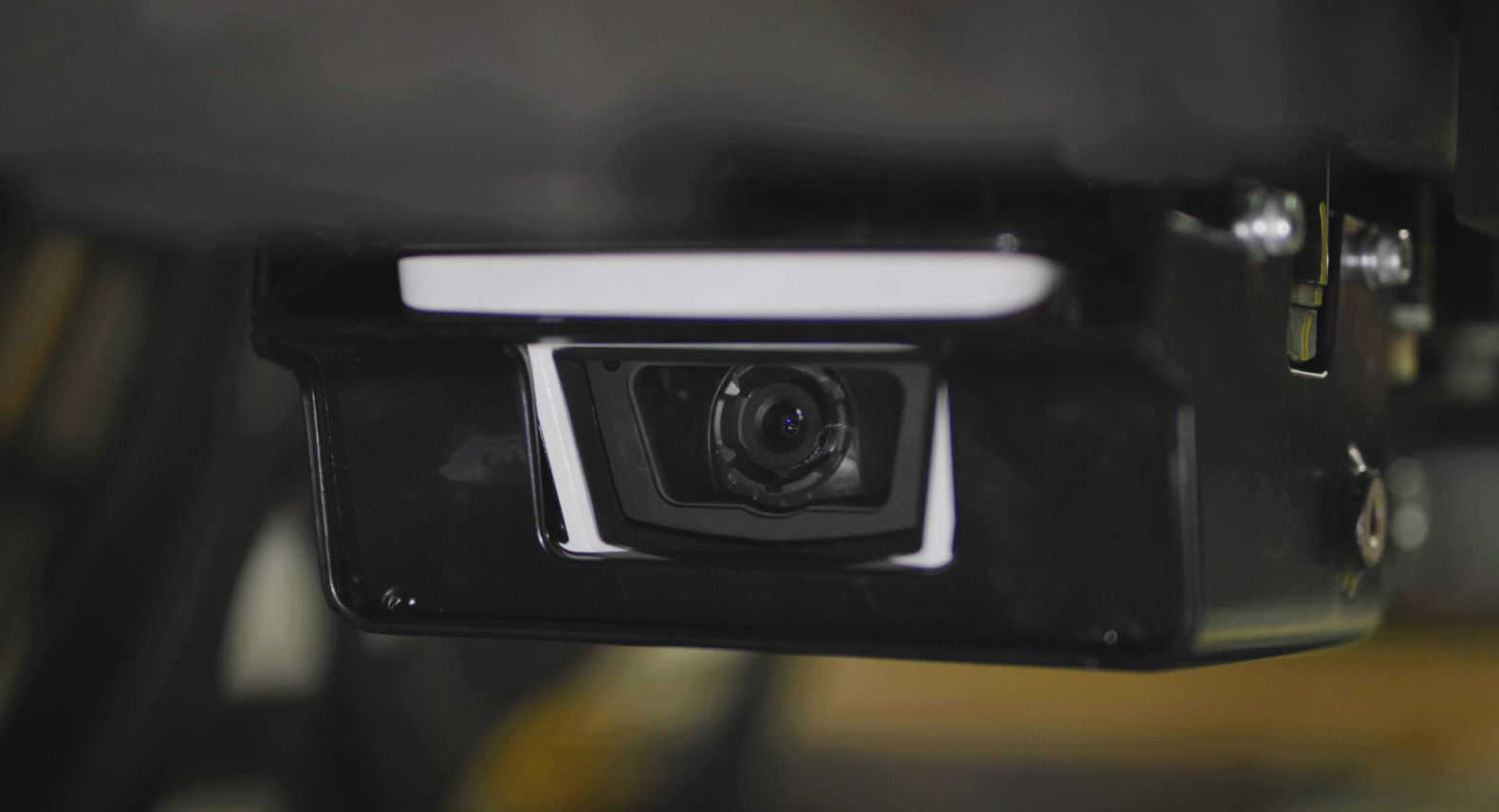
The images captured will provide engineers with real time alerts of potential issues such as overheating or faulty connections, improving safety and efficiency, reducing maintenance costs and helping to better manage resources during incidents.
On average, the faults that the Hotshot train will help detect can otherwise cause around 200 minutes of delays. In more severe cases, faults related to conductor rails have led to delays exceeding 2,000 minutes.
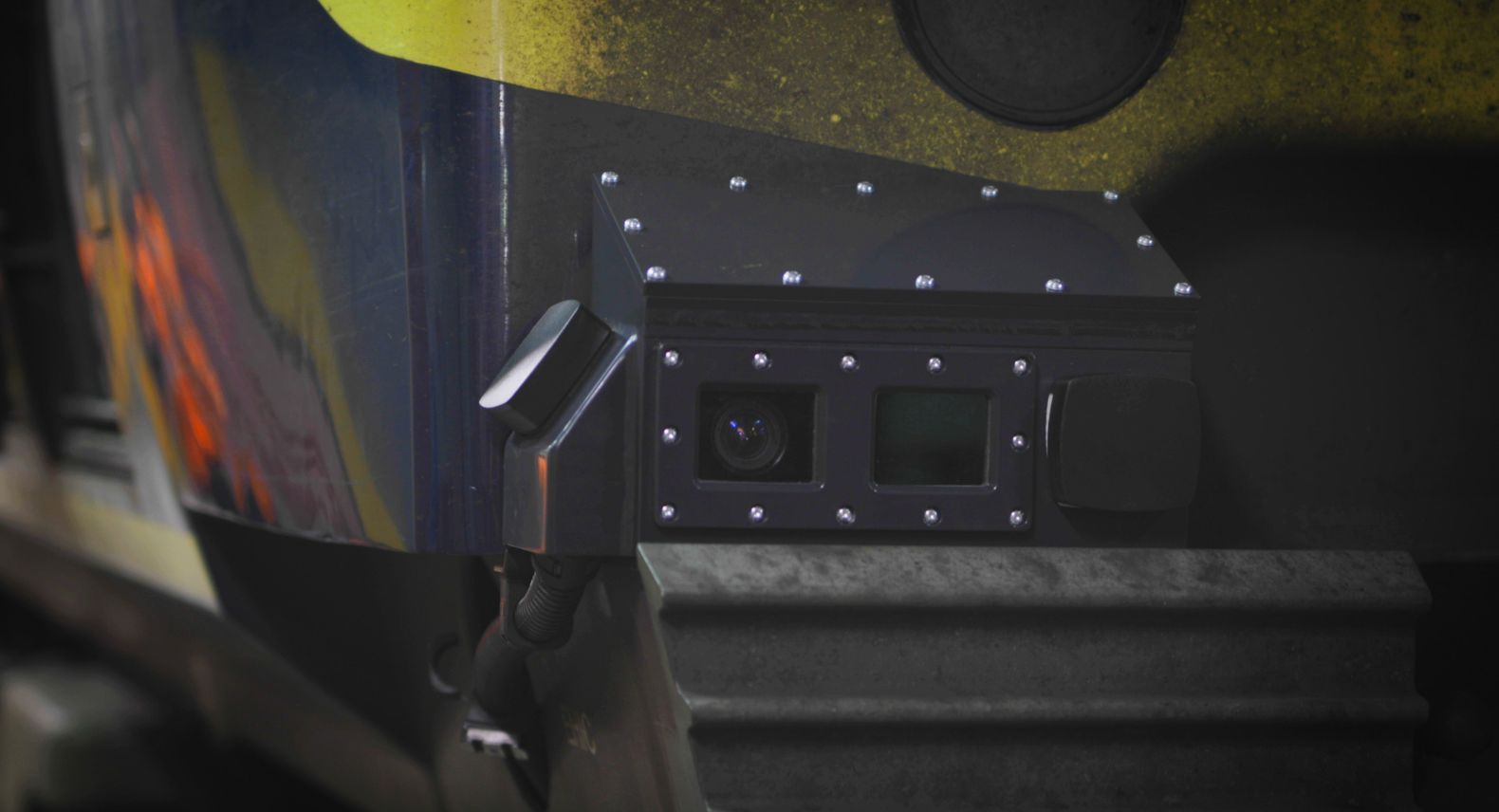
As Class 450 trains serve routes between Central London and Surrey, Hampshire, Berkshire and Dorset, the trial is the first time such round-the-clock monitoring has been deployed on the vast majority of the SWR network.
An earlier more limited trial on the SWR network saw a fault in the Ashtead area of Surrey rectified within 48 hours with no impact on customer journeys. A previous similar incident had caused 2,500 minutes’ worth of delays.
Rail Minister Lord Hendy said:
“This Government is fundamentally reforming how our railways are run - creating a network that works better for the people and freight using it.
"The cutting-edge technology that the integrated South Western Railway is trialling is key to achieving this and will serve as an example of the kinds of smart investments publicly owned rail companies can implement to improve services for passengers."
"Upgrades like this will prevent disruption and reduce delays - supporting growth, jobs and homes as part of the Government’s plan deliver an efficient and reliable railway."
Speaking on behalf of South Western Railway and Network Rail, Neil Drury, Engineering and Infrastructure Director for South Western Railway, said:
“Much like our famous ‘Flying Banana’ train which helps monitor the tracks, you can now look out for Hotshot. We hope this innovative collaboration between SWR, Network Rail, Angel Trains and our other partners will identify potential infrastructure issues before they escalate, helping to reduce disruption on the network and keep our customers moving.”
Barry Fox, Head of Product Management at Angel Trains, said:
“We’re proud to be supporting the introduction of this technology on passenger trains. Continuous monitoring of the infrastructure offers real value in helping deliver a more reliable railway for passengers. This has been made possible by working closely with our customers and suppliers to deliver a fully integrated solution.”
The project is a collaboration between SWR and Network Rail with industry partners Angel Trains, One Big Circle, Siemens and dg8 Design. The project has been designed, managed and funded by Angel Trains.
Should the year-long trial prove successful, the technology could be installed on other trains in the SWR fleet, increasing the coverage on the network even further.
The South Western Railway and Network Rail trial follows the expansion of similar thermal imaging monitoring by South Eastern Railway – also a publicly owned operator as part of DFTO, which serves South East London, Kent and parts of East Sussex.