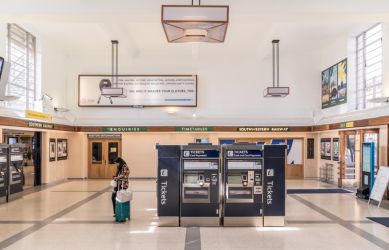
The Background – Why have we done this project?
The story of this project goes back to 2019 when Lord Hendy, then Chair of Network Rail, met with the Railway Heritage Trust and SWR to discuss his vision for the restoration of some of the heritage features of the station that had been lost over time.
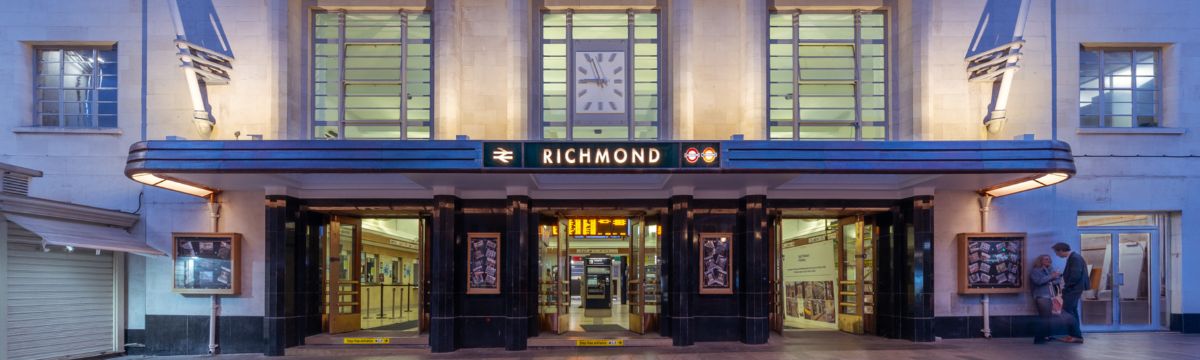
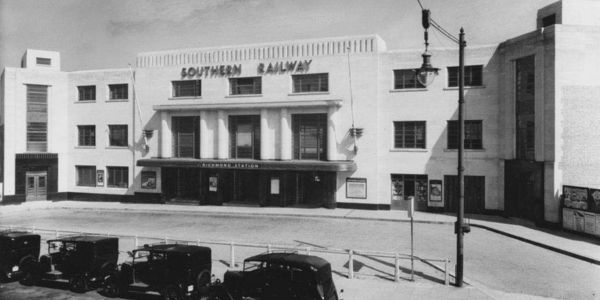
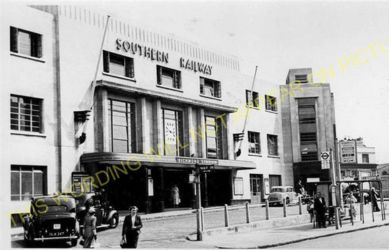
The Richmond Station that we see today was built in 1937 and had been designed in the Art Deco style of the day by the Southern Railway’s lead architect, James Robb Scott and his team.
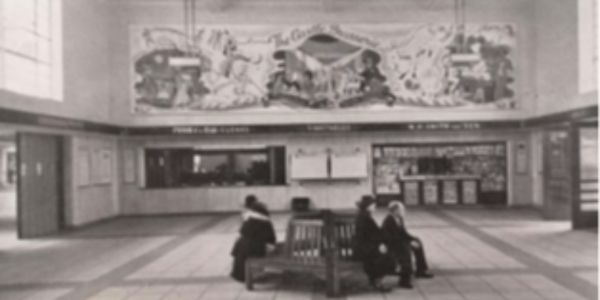
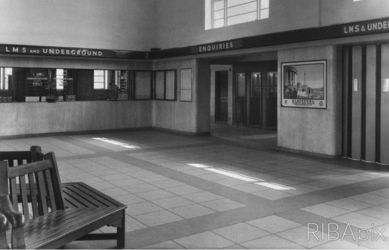
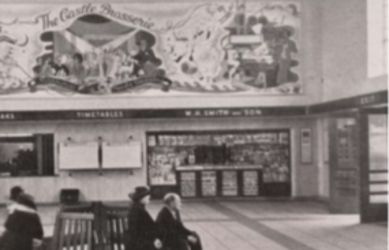
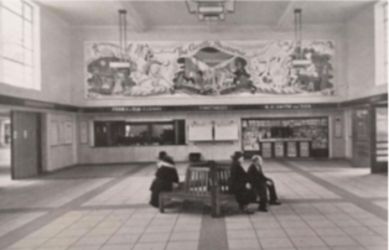
Archive photographs of the station façade and booking hall can be seen below:
A number of other stations on the Southern network were designed by Scott and his team and built around the same time, and many share similar Art Deco features with Richmond. Among these stations are Surbiton, Woking, Malden Manor, Chessington North and Chessington South.
Archive photograph of Surbiton station can be seen below:
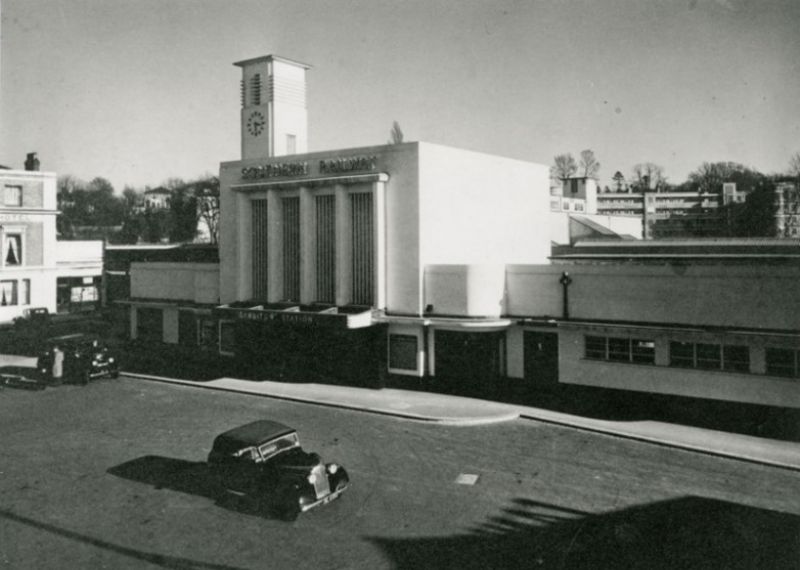
The vision was to restore the original bronze entrance canopy fascia above the entrance doors to the same Art Deco design that was evident in the archive photos of the station provided by the Railway Heritage Trust, and to restore the appearance of the booking hall with the original design features that had been removed or covered up over time with successive development and refurbishment.
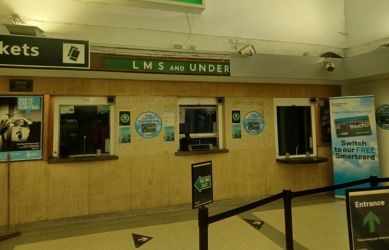
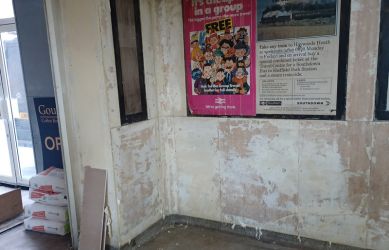
The station façade had deteriorated over time and the booking hall had been adapted with various layers of decoration, information and retail units that resulted in the inherent architectural character of the building being lost and concealed.
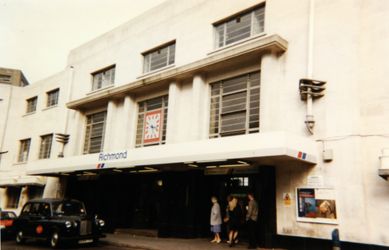
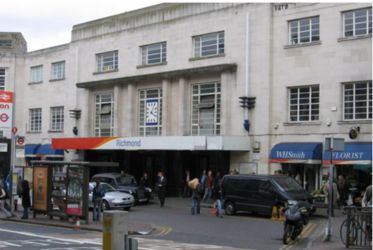
Earlier iterations of the canopy cladding – Network South East and Stagecoach can be seen below:
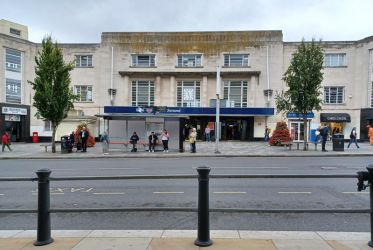
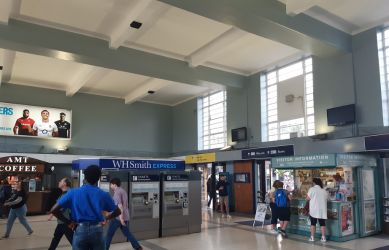
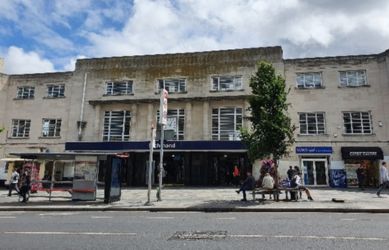
The façade and the booking hall before work began:
A draft list of features to be considered for restoration was therefore drawn up and South Western Railway, the train operating company responsible for the station, were approached to discuss how the project could be taken forward.
No funding was available at this stage, but it was agreed that the initial step would be to carry out some investigations to establish what, if anything, remained of the original design features.
Initial non-intrusive investigations suggested that there was no evidence of the original entrance canopy fascia.
In the booking hall, there was some evidence of a timber profile that had been cut away over the entrance doors, but it was inconclusive as to whether this was the original feature or not, and to what extent it remained.
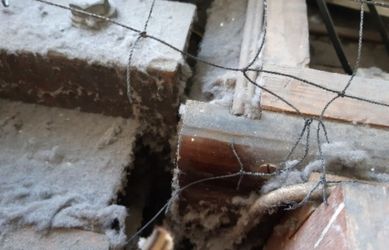
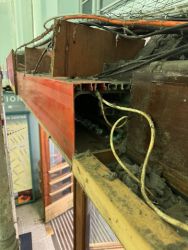
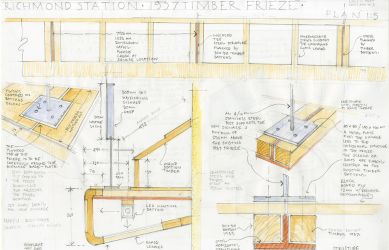
Details of the existing perimeter frieze before work started can be seen below:
While this wasn’t necessarily the outcome that everyone was hoping for, it at least established a starting point from which we could develop a project, and it had whetted everyone’s appetite to continue.
The next steps – the start of the project
The next step was therefore to put together a Development Report that laid out all of the scope and heritage features that would ideally need to be included in order to realise the vision that had been laid out.
SWR managed to secure a small amount of funding from the DfT to enable a Design Study to be produced. The railway heritage architects, Benedict O’Looney, were engaged in 2023 to produce a report that created computer images of what a restored Richmond Station entrance canopy and booking hall could look like, and what scope would need to be included to realise the vision.
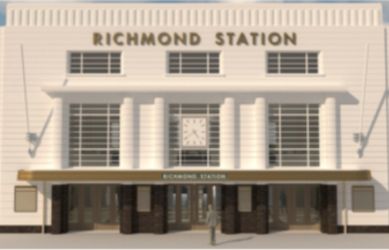
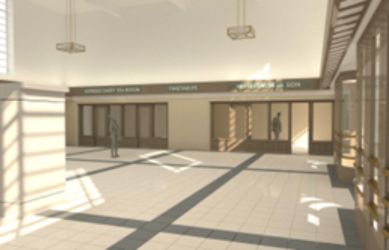
CAD renderings of the vision by the Architect, Benny O’Looney:
The Development Report gave us the Masterplan and a visual representation of what we were ultimately trying to achieve.
Cleaning and repairs to the facade
SWR were in a position in 2023 to fund some of the initial cleaning and repairs, and work started in late 2023 on refurbishing and polishing the bronze and mahogany entrance doors and cleaning the Portland stone of the station façade.
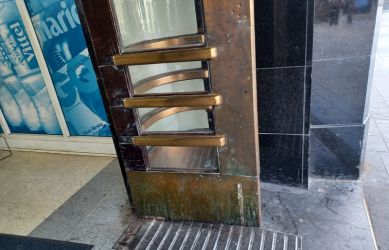
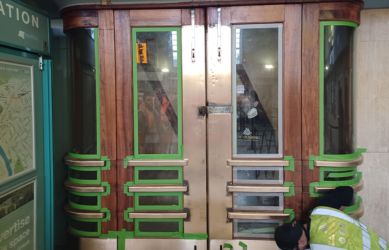
The entrance doors had become damaged and worn over time and had been overpainted in various colours of stain. The bronze fittings had also tarnished significantly. The door sets were removed from site one set at a time to minimise disruption and were repaired in the Joiner’s workshop using reclaimed mahogany timber.
The Bronze clad entrance doors before and during their restoration:
The façade before and during cleaning of the stonework:
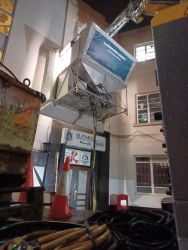
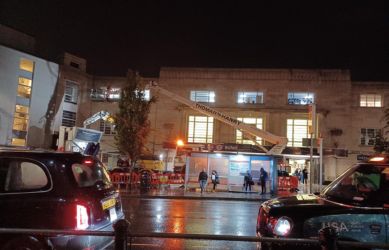
The stone cleaning process in action overnight:
The stone cleaning was carried out a night and used a methodology that did not require scaffolding in order to keep any disruption to customers to a minimum.
The Flag Poles
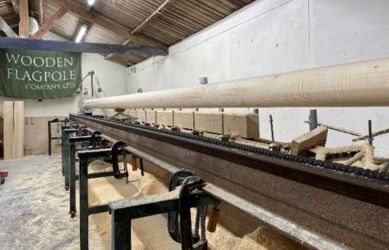
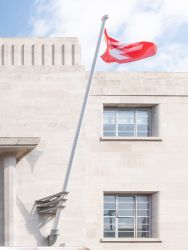
We also renewed the flag poles on the front elevation and restored them to their deployed position. The flag poles were manufactured in the UK from laminated Douglas fir, a similar material to the original flag poles.
The new flag poles being turned on a 9m long lathe:
The outcome of this initial stage of work was a significant and obvious improvement to the appearance of the station façade and the project was receiving very positive feedback from our customers travelling through the station as well as our stakeholders such as the Railway Heritage Trust (RHT) and the London Borough of Richmond upon Thames.
Paint colours
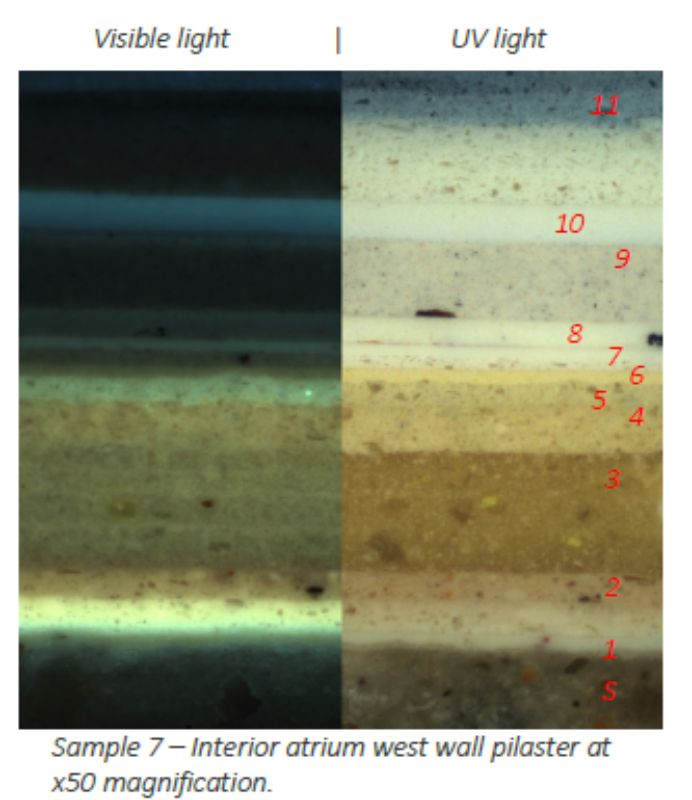
We were therefore encouraged to maintain the momentum and the RHT funded two further small items of work. The first was a chronology of the paint that had been applied to the station since its construction in 1937.
The analysis was carried out by the University of East Anglia and identified the colour palette that had been used on the façade and booking hall the first time it was painted.
An extract from the paint analysis report showing the layers of paint:
These are the colours that you see on the window frames and in the booking hall today, both of which have been repainted in accordance with the original colour palette.
High level station sign
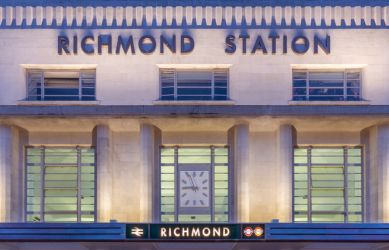
The second piece of work was the reinstatement of the high level bronze lettering to the station façade. The original wording was “Southern Railway” which is obviously not applicable today, so it was decided to replace the lettering with the station name. The size of letters and font used all faithfully replicate that of the original 1937 lettering.
The bronze finish station letters in manufacture and in place:
Entrance Canopy
In the meantime, work had been planned, and funding had been secured for the restoration of the station entrance canopy.
The intention was to restore the canopy fascia to the original Art Deco design that was evident in the archive photographs and drawings.
Archive photo of the Station facade:
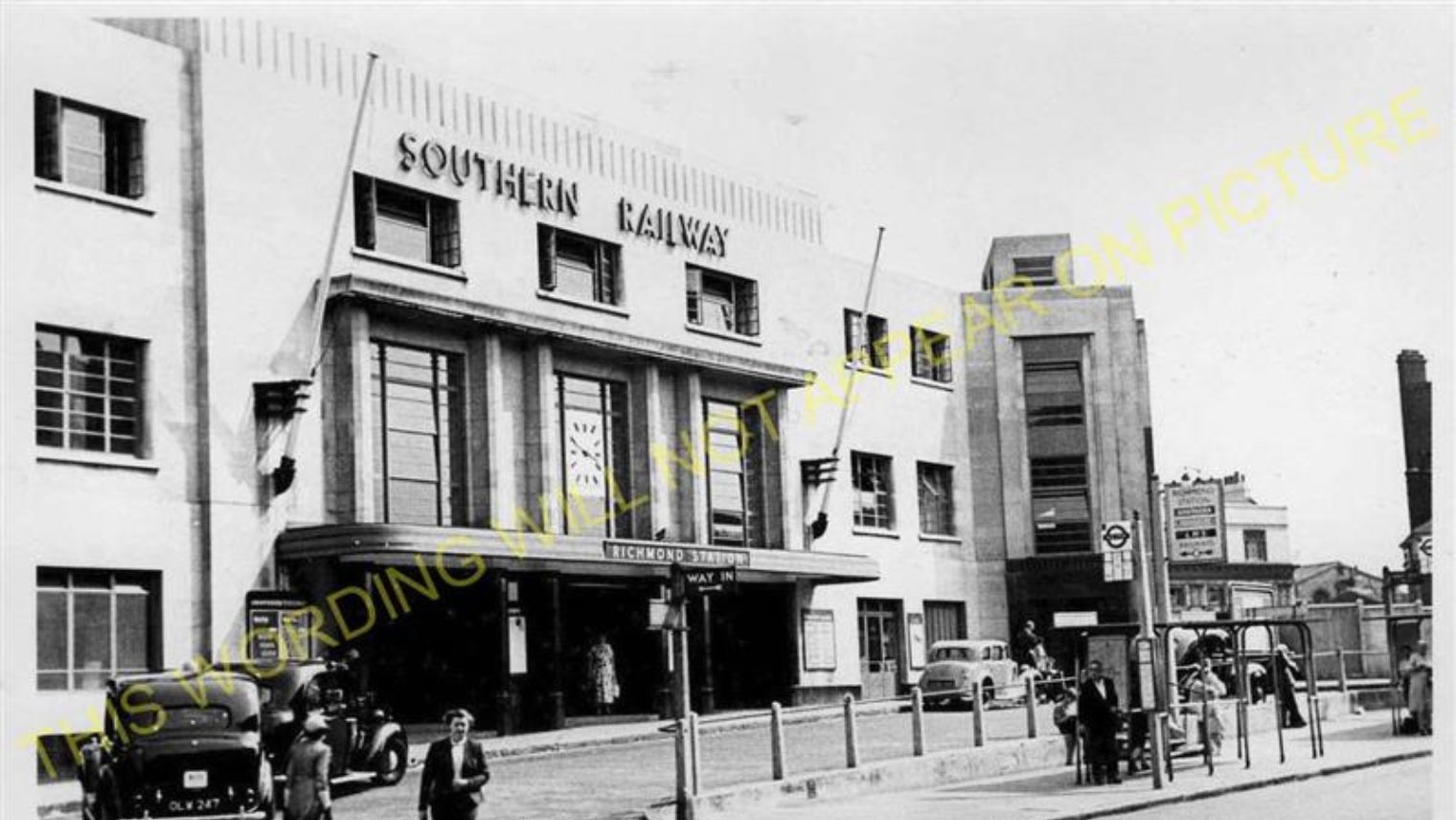
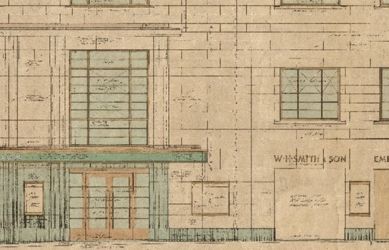
Archive Drawing of the station façade. Drawing courtesy of Network Rail Corporate Archive:
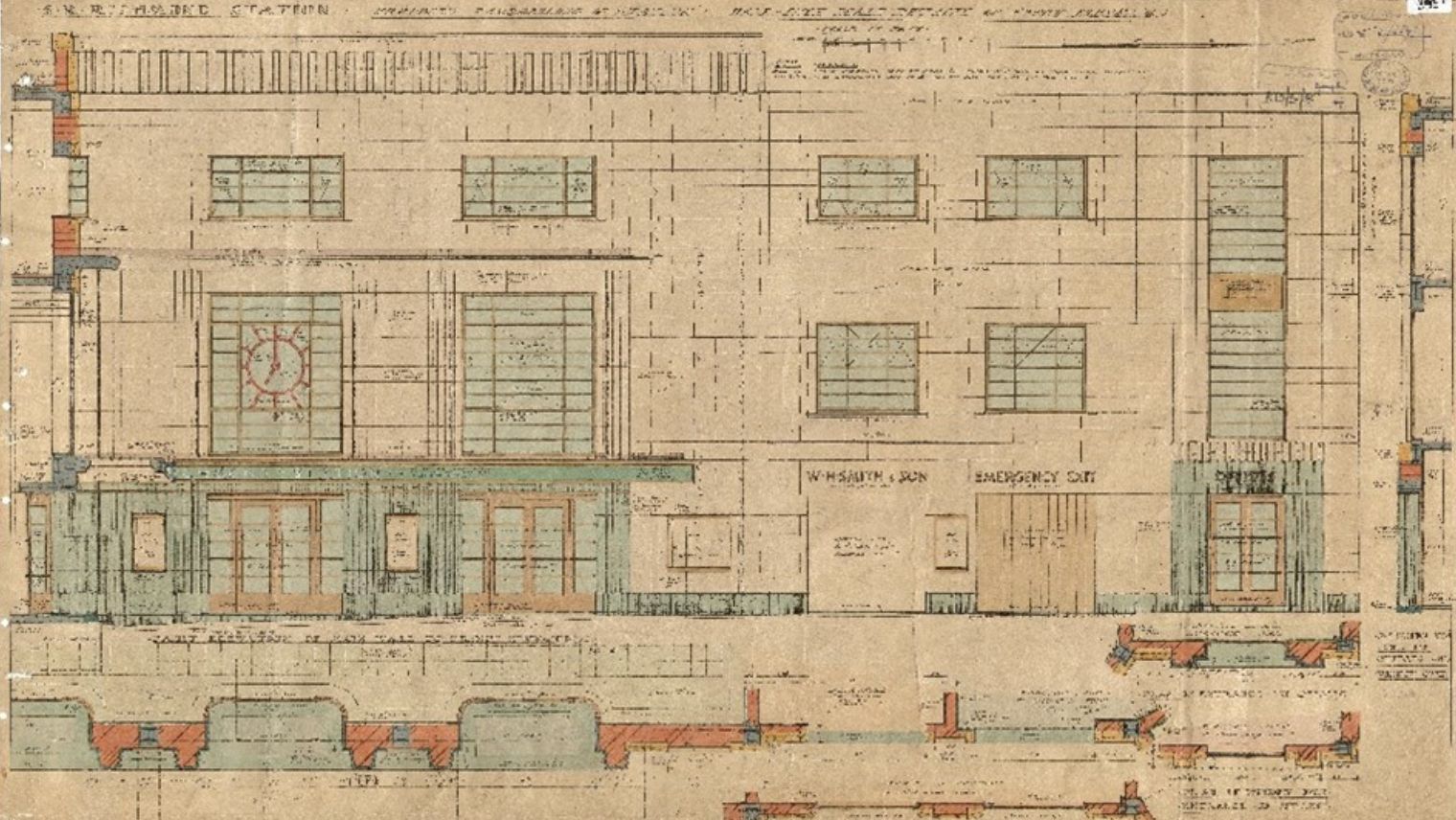
The precise sizes and details of the fascia could not be finalised until the existing blue fascia had been removed and everything stripped back to the original concrete structure beneath.
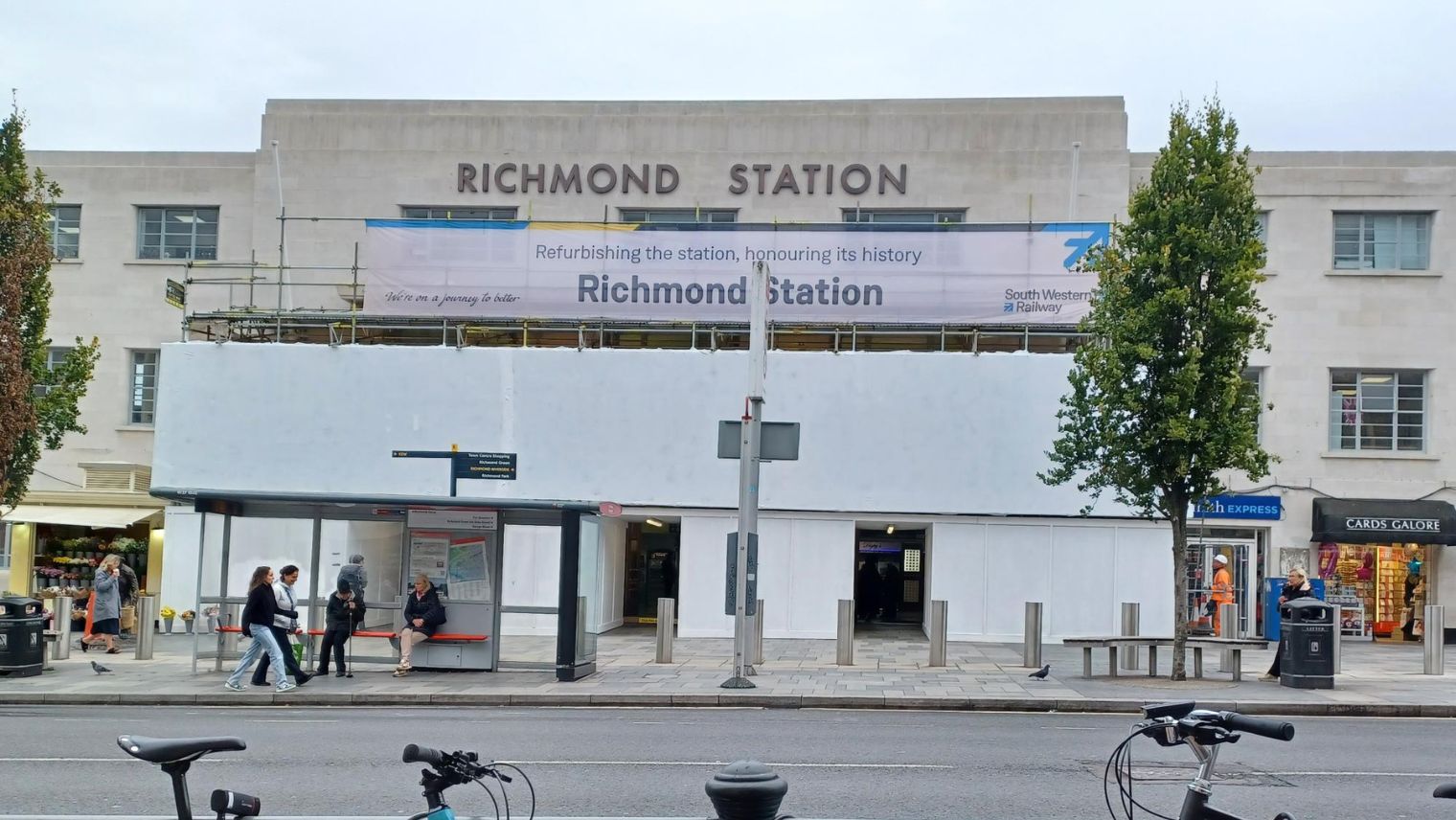
Work started in August 2024 and the scaffolding around the entrance canopy went up in September. The scaffolding was necessary to enable to the entrance doors to continue to safely be used by customers while the works to the canopy progressed during the day. The scaffolding was wrapped to improve both safety and the appearance of the entrance while the work was in progress, and a temporary station name banner was installed above it.
The wrapped scaffolding in place to enable the canopy works to progress:,
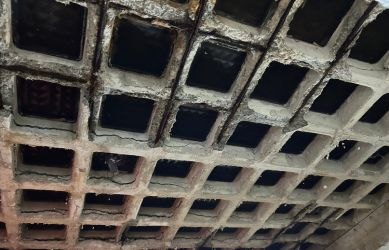
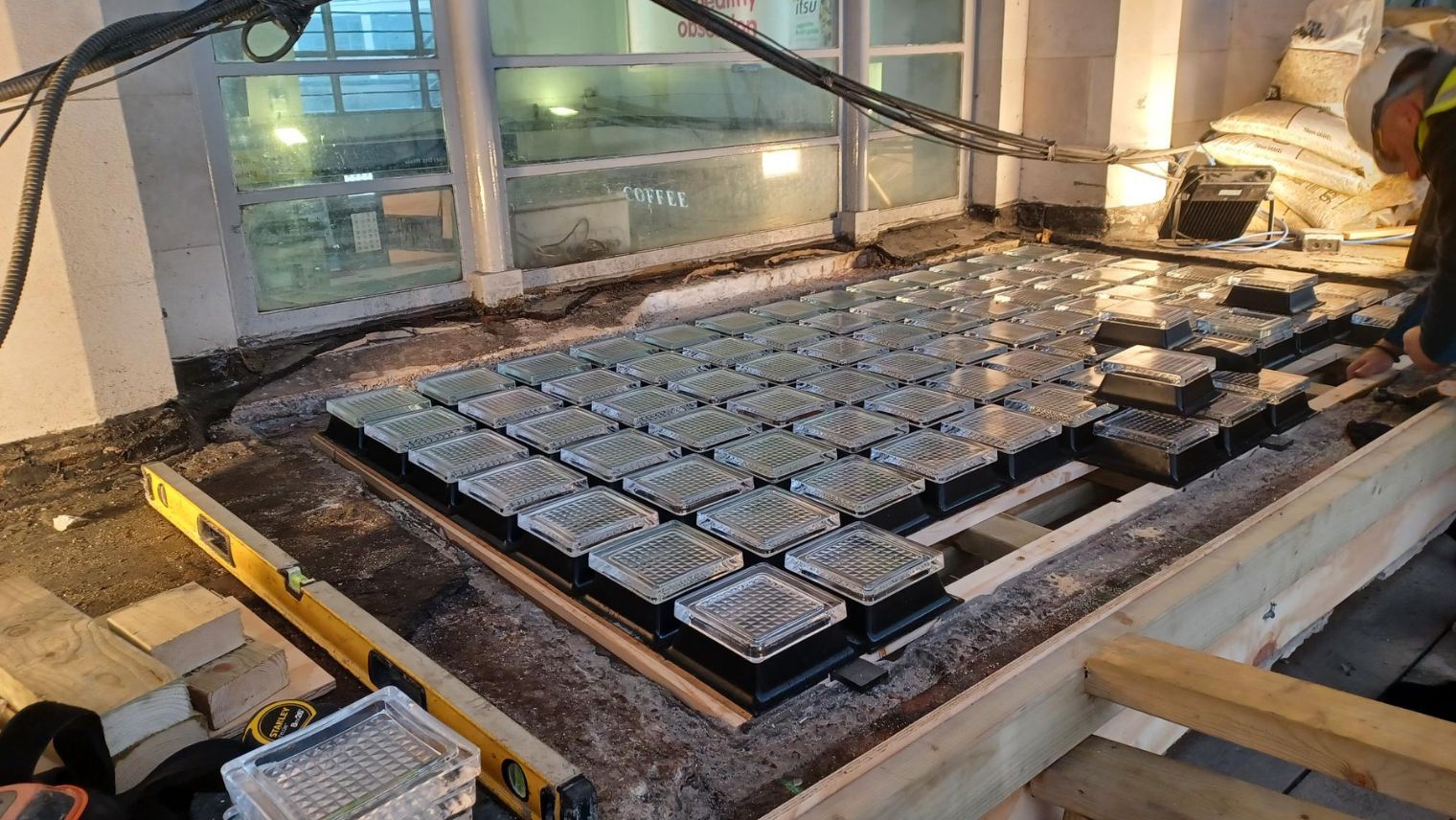
The original rooflights within the canopy had been covered up for many years and they were discovered to be in poor structural condition once the existing finishes had been stripped off. They would therefore require replacement.
The archive drawing detail of the Glasscrete rooflights and a photo of their condition before replacement. Drawing courtesy of Network Rail Corporate Archive:
This original rooflight was a “Glasscrete” product and the same product is still available today, constructed by Luxcrete using the same methods and with the same hand built skills.
In the spirit of trying to restore the rooflights to as original a condition as possible, we tried to replicate the number of prisms that were within each of the original glass lenses, but lenses with the original 9 prisms are no longer available so we had to source lenses with 16 prisms instead.
Skilled installation of the new Luxcrete rooflights:
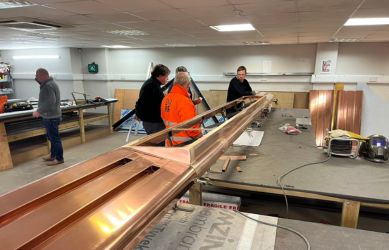
Meanwhile, the canopy fascia had been measured up and was being crafted from lengths of bronze sheet in the supplier’s workshop. All of the sections were hand crafted using highly skilled metal workers to produce the complex profiles and curves that replicated the original fascia.
The new bronze canopy fascia being crafted in the workshop:
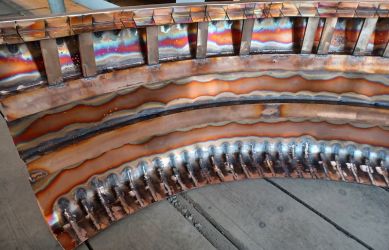
An example of the amount of skill and work that went into creating the fascia is the curve at the top and bottom of the profiles were formed by hand by carefully folding the bronze sheet in a press up to 19 times to form the correct curvature.
The bronze will naturally patinate over time to a more typical, darker colour as the natural layer of oxidation forms.
External Lighting scheme
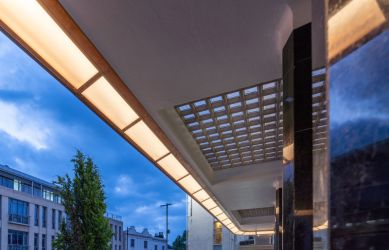
A new lighting scheme has been incorporated within the restored canopy. The top of the canopy has four new uplighters lighting the lower façade above the entrance, and a new strip of lights has been added to illuminate the high level lettering.
Within the bronze fascia, new downlights illuminate the entrance doors through obscured glass laylights that have been designed to replicate the original ones as closely as possible.
The new lighting scheme in place and transforming the façade at night:
External poster frames
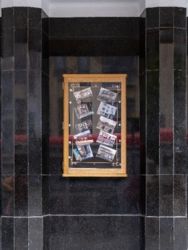
Five new oak poster frame cabinets have been installed on the front elevation to replace the missing original ones that are evident on the archive photographs and drawings.
Oak was chosen as being a sympathetic material and colour to complement the bronze features, while being practical and easier to repair or replace in the event of damage or vandalism/
One of the new oak external poster frames:
Booking Hall
While the work was ongoing to the entrance canopy, our attention turned to the booking hall.
The Development Plan had identified the opportunity to rationalise the retail units that protruded into the booking hall, and which contributed to its cluttered appearance.
The Perimeter Frieze
In October 2024, we took the plunge and started to remove the modern cladding to the perimeter frieze to see what, if anything, was behind it. We were rewarded with revealing the original timber frieze and green glass signage, most of which was pretty much intact.
The removal of the modern frieze cladding revealed the original frieze beneath it:
The sections above the entrance doors had been removed but, the majority of the rest of the frieze was still in place, although in need of repair and restoration:
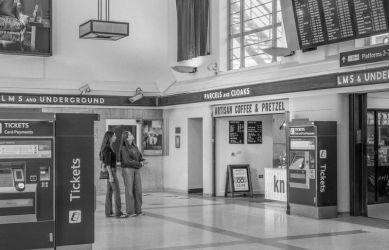
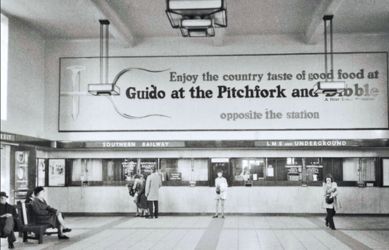
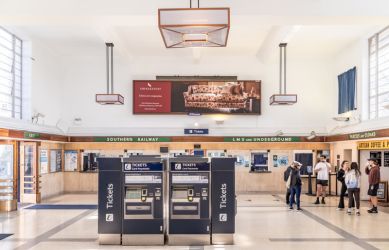
A RIBA archive photo of part of the booking hall and the same view today:
WH Smith vacated their retail unit in January 2025 having been a tenant of the original station in the 1930s.
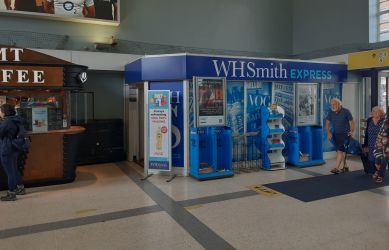
An archive photo and drawing showing the WH Smith retail unit. Drawing courtesy of Network Rail Corporate Archive:
Work then started in early 2025 to remove the retail protrusions from the booking hall area and convert the smaller unit into a new location for the Tourist Information kiosk.
The remainder of the modern perimeter frieze fascia was removed to reveal the majority of the original frieze still intact. Unfortunately, the original radiused corners had been cut away to enable the more modern fascia to be fitted so these were restored using matching timber sections, skilfully cut into the original frieze by the on-site joiners.
The recreation of the radiused corners of the frieze:
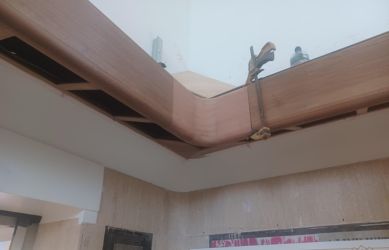
The whole length of the frieze has been sanded back, repaired where necessary, and French polished to the original colour by a French polishing company local to Richmond.
The laylights to the underside of the perimeter frieze have also been restored and new LED light fittings installed to provide downlighting to the whole perimeter of the booking hall. A total of 16 new laylight diffusers were sourced to match the existing ones that were missing or broken.
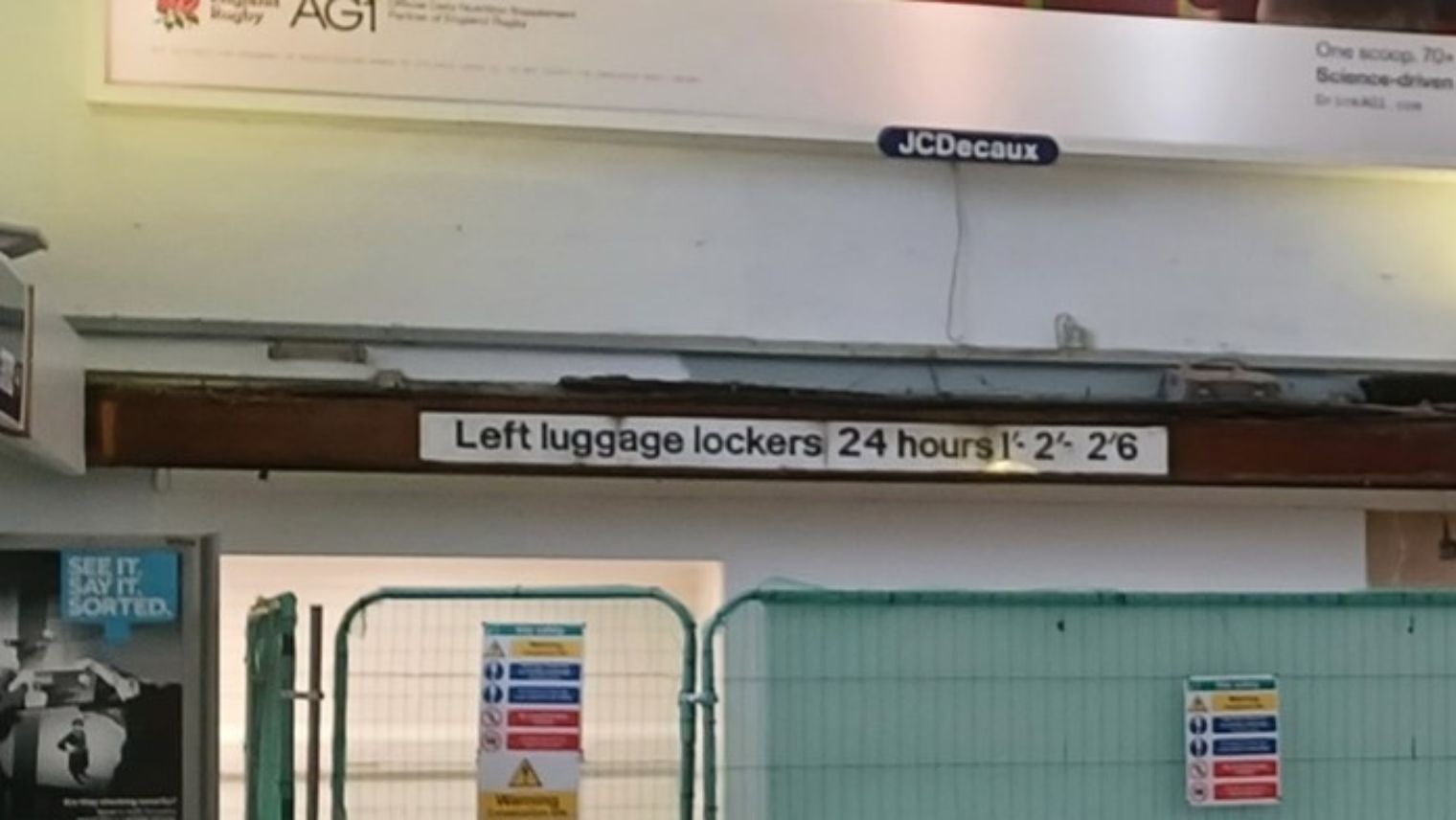
The original glass signage was also uncovered when the modern fascia was removed, and this has been preserved in place as far as possible. The original green glass sign above the Parcels and Cloaks window had been replaced with a Left Luggage sign, installed at some point before decimalisation in 1971.
The later Left Luggage sign before removal to storage:
The location of two signs, “Enquiries” and “Parcels and Cloaks” has been changed to avoid confusion with current operations.
One broken sign has been remanufactured, and the later Left Luggage white background heritage sign has been replaced with a more original green glass version. The original “WH Smith” sign has been removed at their request as they no longer operate from the station.
This sign has been replaced with a replica of the original “Parcels and Cloaks” sign and the Left Luggage sign has been preserved and stored safely at the station as part of the booking hall history, along with the WH Smith sign.
The tangle of cables and pigeon netting has been rationalised or removed and concealed with painted timber panels that also provide a pigeon deterrent measure.
The missing section of frieze above the entrance doors:
The current wayfinding signs have been rationalised and those that are needed have been sensitively installed above the perimeter frieze.
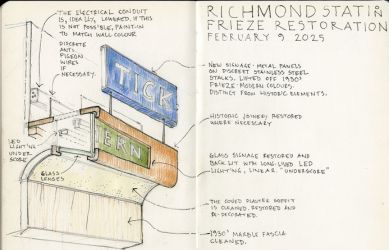
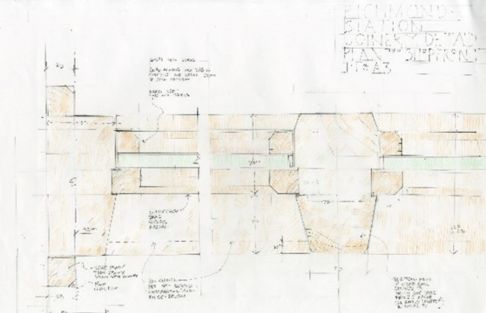
The Architect’s sketches of the new wayfinding details to the perimeter frieze:
Shopfronts
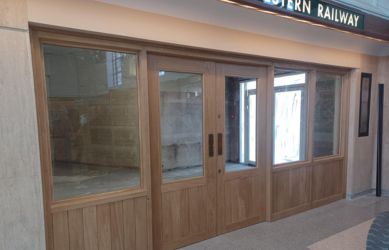
New oak shopfronts have been installed to the two retail units at the southern end of the booking hall. They have been designed to reflect the detailing that would have been appropriate when the station was built and have been crafted by specialist joinery company local to the SWR network. The ironmongery used on the shopfront doors is salvaged and has been sourced by the architect from a dealer in Vauxhall.
The Architect’s sketches of the details of the shop front joinery:
Shop front before and shop front after:
Travertine wall cladding
Once the WHSmith protrusion had been removed it became evident that there was an area of travertine marble wall cladding within the unit that had been concealed beneath layers of paint.
The paint was stripped off and the travertine beneath was repaired and touched up by hand where fixing holes had previously been drilled.
Travertine marble overpaint in the process of removal and completed:
The original tile surround poster frames were also revealed and repaired and have now been adorned with period correct posters from the 1930s on licence from the Science Museum.
Ceiling chandeliers
When the station was first built the booking hall had large Art Deco style lights hanging from the ceiling as seen in the archive photo below.
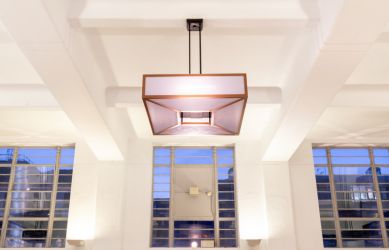
A view of the original lighting chandeliers in place and the modern interpretation:
These had been removed at some point in the past although the hanging brackets were still in place within the ceiling. After careful testing of the integrity of the hanging brackets, newly manufactured replicas have been installed with pigeon deterrent measures carefully concealed on the top of each fitting.
It has unfortunately not been possible to replicate these as light fittings for various reasons, but the central fitting has been spotlit from the perimeter on all four sides to try to mimic the effect of a light fitting.
The modern interpretation:
Heritage Sign
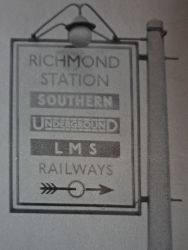
Displayed within the booking hall in the corner by the ticket windows is one of a pair of original back to back metal signs that used to be displayed on a post within the forecourt as shown in the photo below. This sign has been kindly loaned to us by the London Transport Museum and has been organised by Lord Hendy.
The Heritage sign in situ and prior to installation in the booking hall:
Reflections on completion
Looking back at this project now that we have reached the end of the second phase of works, it is clear that few original heritage feature remained on the external façade, and phase 1 of this project was about cleaning and restoring the building fabric and then replicating the original heritage and architectural features.
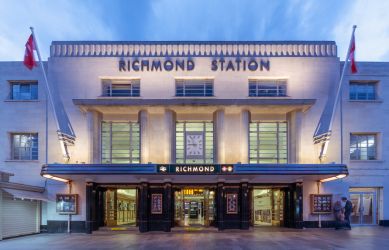
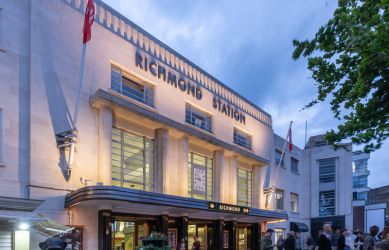
We believe that we have restored the façade to something very close to the original appearance, as shown in the photos below.
The 1930s view compared to the 2025 view:
The booking hall was a different story. Many of the original features were still in place but had been concealed over time with the various layers of history.
The second phase of works in the booking hall was therefore about restoring these features back to their original glory and revealing the inherent character of the booking hall in a way that was true to the architect’s original intent.
The original simplicity and clarity of the architecture in the booking hall is once again visible:
We are very grateful to the following funders who have enabled this project to happen and who have afforded us the luxury of time and encouragement to complete the works to the best of our ability.
We are also grateful to our team of suppliers and contractors, whose skills, experience and passion for this project have been evident throughout the process and shines through in the product.
Many of our contractors told us that they have never worked on a project before where so many customers have stopped and engaged with them in such a positive way, and this has been a major contributor to their pride and motivation in being involved in this project.
And finally, we are very grateful for the patience, interest and reaction shown by our customers using the station, and by members of the local community during the works, and the overwhelmingly positive feedback that we have received when the various stages of works have been completed.
Richmond station can now once again proudly take its place as a gateway to the town of Richmond upon Thames.
Photo Gallery
The Station façade before any work was carried out:

Photograph by Nina Carrington courtesy of the Railway Heritage Trust

Photograph by Nina Carrington courtesy of the Railway Heritage Trust

Photograph by Nina Carrington courtesy of the Railway Heritage Trust

Photograph by Nina Carrington courtesy of the Railway Heritage Trust

Photograph by Nina Carrington courtesy of the Railway Heritage Trust

Photograph courtesy of Benedit O’Looney Architects

The booking hall before

The same view after. Photograph by Nina Carrington

The booking hall before

The same view after. Photograph by Nina Carrington

The booking hall before

The same view after. Photograph by Nina Carrington

The booking hall before

The same view after. Photograph by Nina Carrington

English Heritage Archive aerial photograph from August 1928 of the first Richmond Station built in 1846 and replaced in 1937 by the current station building

Archive postcard of the original Richmond station looking West towards the station buildings